
Matt Robinson reports on G.K. Beale’s The Temple and the Church’s Mission
Tell us a bit about yourself…
My wife Jenna and I joined Trinity in 2014 as founding members from EP Annapolis. We have four children and have served in the men’s and women’s ministries, as adult and children’s Sunday school teachers, and on the Pastoral Search Committee.
Book Basics
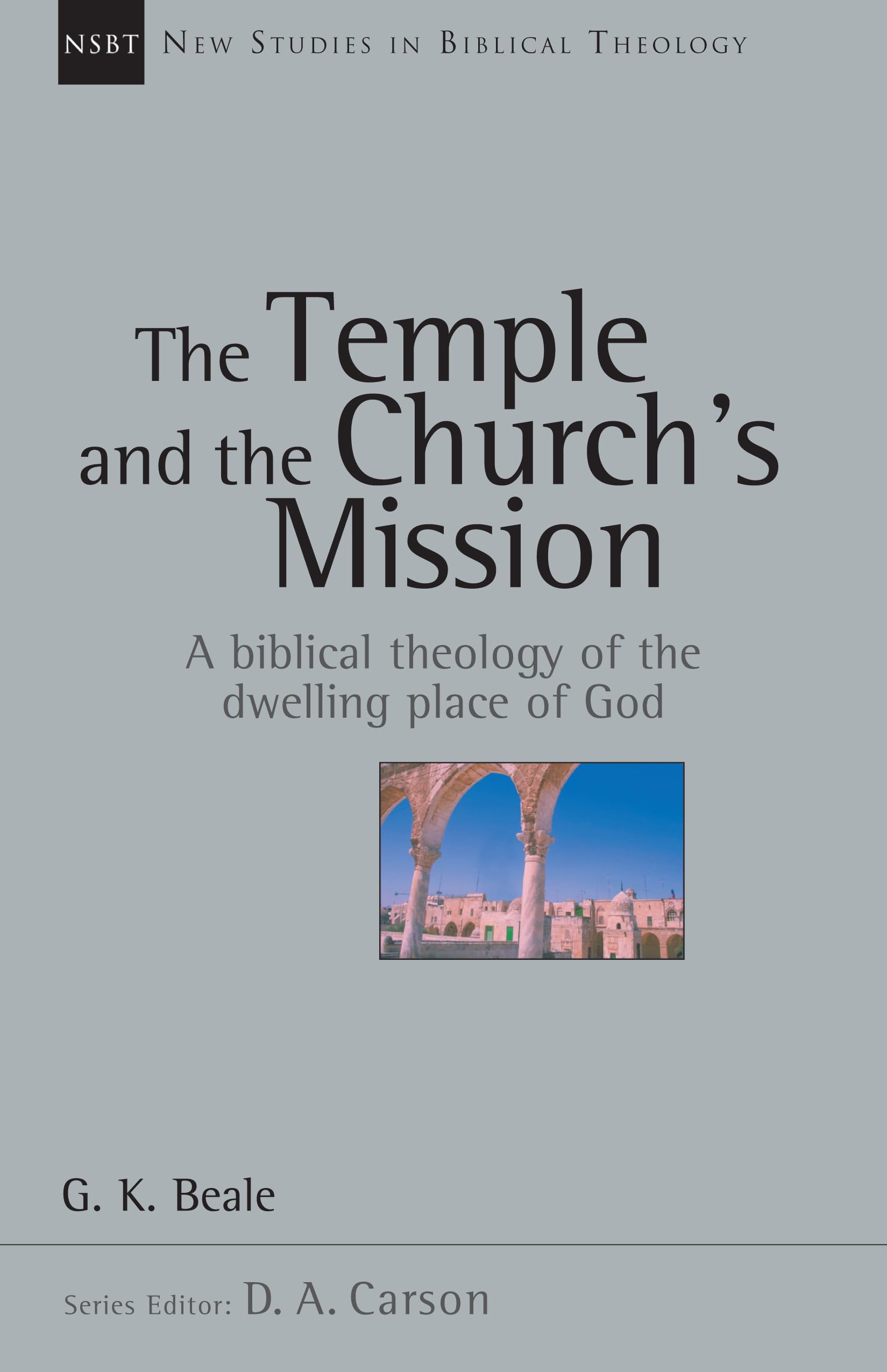
- Title: The Temple and the Church’s Mission: A Biblical Theology of the Dwelling Place of God
- Author: G. K. Beale
- Genre: Biblical Theology (Temple, Eden/New Creation, Ecclesiology, Missiology)
- Difficulty: Moderate (dense, somewhat academic, lots of OT/NT connections, assumes some knowledge of covenant theology and Ancient Near East culture and worldview)
Two-Sentence Summary
Beale argues that the Bible’s “temple” storyline begins in Eden, where God dwelt with humanity, and that God’s purpose was always to expand His dwelling-place to fill the earth through an obedient humanity. That purpose is ultimately fulfilled in the person of Christ as the true temple, then through union with Christ as the Spirit makes the Church God’s dwelling place now, moving towards the future eschatological day when the new creation is completely saturated with God’s presence – “Behold, the dwelling place of God is with man” at the end of Revelation.
Why did you pick up this book?
I’ve always had a particular interest in the early chapters of Genesis, and in the very clear allusions to, and connections with, the Temple made there. The fact that the Bible is “book-ended” with this language (the beginning of Genesis and the end of Revelation), along with ubiquitous temple language throughout, means that understanding a Biblical doctrine of creation and consummation necessitates a clear understanding of the temple.
Furthermore, it is easy at times to relegate the temple to the Old Testament, as ultimately tied to the Law and Old Covenant. Beale presses the opposite conclusion: the dwelling presence of God is a major thread that ties together creation, covenant, the incarnation, the cross, Pentecost, the church, sanctification, the Great Commission, and the hope of the second coming and the new heavens and new earth.
If you’ve ever wondered why Scripture repeatedly returns to tabernacle/temple language—“I will dwell among them,” “living stones,” “a holy priesthood,” “a house of prayer for all peoples”—this book aims to show that these are not isolated metaphors but a unified biblical theology.
Key Takeaway
Throughout the whole of Scripture, God has designed the temple to be the place of His presence on Earth and His fellowship with an obedient humanity. This was the commission to Adam and Eve (Genesis 1:28), and it was extended to the patriarchs and Israel, culminating in the construction of Solomon’s temple. However, God never intended it to end there and remain localized in one place. It was to expand to fill the whole earth (I Kings 8, Isaiah 66). Ultimately, Christ is revealed as the true temple (John 2:21) and He dwells among those He calls out into the Church (I Corinthians 3:16, 2 Corinthians 5:16-17), fulfilling the prophecies of the end-time temple (2 Samuel 7:12-14, 2 Corinthians 1:20). This scheme ultimately culminates in the new heavens and the new Earth and the final dwelling place of God (Revelation 22). The original commission God gave Adam and Eve is finally fulfilled when God dwells intimately with redeemed humanity for eternity.
Beale’s own summary can be found here.
Memorable Quote
Instead of a single line from Beale (this is a book better summarized by the texts it highlights), one sentence of Scripture captures the end toward which he keeps pointing:
“Behold, the dwelling place of God is with man.”
And one sentence captures the church’s present identity:
“In him you also are being built together into a dwelling place for God by the Spirit.”
How did this help your walk with Christ?
This book has a way of making familiar passages feel weighty again. By tying together the core identity of the Church in Christ to the very pillars of creation, the common and ordinary means of grace take on a new depth. All of the doctrines of our faith are not merely bolted on to a background of “the heavens and the earth”, but rather are the proper lens through which all of creation should be understood.
It also reframes and adds weight to the Great Commission. Evangelism is not merely an obligation or duty, but rather an incredible privilege. We are allowed to partake in the Spirit gathering a people to Christ so that God’s dwelling presence spreads, all in anticipation of a day when “the earth will be filled with the knowledge of the glory of the Lord as the waters cover the sea”.
Who should read this?
- Pastors/teachers who want a robust temple thread for preaching Exodus, Kings/Chronicles, the Prophets, John, Ephesians, Hebrews, and Revelation.
- Elders and deacons who want deeper biblical categories for church purity, corporate prayer, and congregational identity.
- Thoughtful members who enjoy tracing Scripture’s themes—and who don’t mind keeping a Bible open while reading (and perhaps a few commentaries).
Any cautions or limitations?
- It’s not a quick read. Beale covers a lot of ground and frequently interacts with Second Temple Jewish sources, the ANE context of Genesis, and broader background material.
- Some links can feel speculative. Even sympathetic reviewers note moments where the cumulative case may feel “stretched” in places (especially if you’re cautious about typology).
- Eschatological questions will surface. Readers who expect a future, literal rebuilt temple may disagree with Beale’s handling of texts like Ezekiel’s temple vision and some passages in Revelation/2 Thessalonians. (These sections of the book can be paired with Beale’s commentary on Revelation, which goes into far more detail.)
Final thoughts?
I started this book out of curiosity for the early chapters of Genesis, but found much more. Beale offers a compelling way to see the unity and univocality of Scripture and the immense weight of the Church’s identity and calling. The temple storyline is not a detour from the Gospel – it is one of the central ways the Bible proclaims the Gospel’s vision – God, in Christ, by the Spirit, dwelling among a redeemed people, fulfilling the command of Genesis 1:28, until ultimately that presence fills the entire renewed creation.
























Excellent review, Matt. This one has interested me for a couple of years, but you’re the first person I’ve known who’s read it. I hope to add it to my ever-growing library soon!