Elder Ben Zintak reports on O. Palmer Robertson’s 1980 classic on covenant theology
Tell us a bit about yourself…
I joined Trinity in 2015 and became a ruling elder in 2022. A lot has happened since I joined — I got married, moved to Trinidad and Tobago (and then back), and now have four children. I’d always liked theology, but joining a PCA church and getting steeped in Reformed Christianity has made me passionate about doctrine and church history. I’m always looking for accessible works on theological precepts. I read The Christ of the Covenants in late 2025.
Book Basics
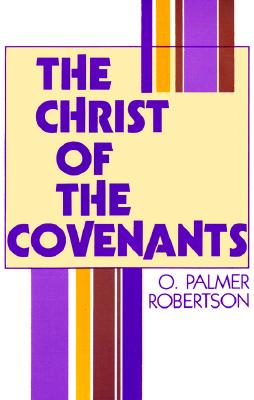
Ben’s 1980 edition with…uh…BOLD colors.
Two-Sentence Summary
In The Christ of the Covenants, Robertson traces God’s redemptive work through several covenants, which he sees as progressively building on each other and reaching their ultimate fulfillment in Christ. In examining God’s covenants with Adam, Noah, Abraham, Moses, and Christ, Robertson constructs an impressive framework for Reformed covenant theology that stresses continuity and consummation.
Why did you pick up this book?
Our session actually had the opportunity to speak to O. Palmer Robertson — Dr. Robertson is a pastor, author, and professor who has served on faculty at several Reformed seminaries. I wasn’t aware of his reputation, and a fellow elder remarked that he is well known for his book The Christ of the Covenants. I put it on my list after that, figuring if it brought him universal respect in the elder circuit, it must be worth reading. I also had a desire to study covenant theology more deeply after several Sunday School classes by our late pastor.
Key Takeaway
Covenant theology isn’t rocket science, but it isn’t exactly self-evident either. Robertson has a good framework that shows how God’s covenants are consistently gracious and build progressively toward their consummation in Christ. More than anything, I was reminded anew of the cohesiveness of scripture: Robertson shows explicitly just how embedded the concept of covenant is from Genesis through the Gospels. He also draws principles from the Adamic and Noahic covenants that I now understand and appreciate more.
Memorable Quote
The covenant of law represents an advancement in its typological significance. The precepts of law offered the outline for the type of life expected for God’s holy people. While Israel never achieved the full potentialities of this holiness-type, the law nonetheless served to sketch the pattern of life desired for God’s people. They are to be characterized by a life that reflects the holiness of the God of the covenant. It may be concluded, therefore, that the Mosaic covenant of law was an advancement over the Abrahamic covenant of promise. That which was the very essence of the Mosaic covenant represented a step of progress in God’s redemptive purposes.
Most serious consequences will develop inevitably from a denial that God’s revelation consistently progresses throughout redemptive history. It may be admitted quite readily that the arrival of the full delineation of God’s will brought with it problems which had not previously existed. Ask any distraught parent of a modern teenager if he regards the state of teenage as an advancement over infancy. The parent may hesitate to respond immediately as he recalls the multiplication of problems involved in the abrupt arrival of teenaged years. But in the end it cannot be denied that the gangly youth stands much closer to the full realization of manhood than does the infant.
In just such a manner, the childlike trust of Abraham may appear to have definite advantages over the sometimes rowdy adventures of Israel under law. Yet the patient student of Scripture will detect a definite progress toward the goal of Christ. Is that not basically the substance of the example employed by Paul in Galatians 3:23-26? The law is a schoolmaster, an externalized disciplinarian, to bring us to Christ. As teenagers under a tutor, so was Israel under the law. Yet their condition under law was a vital step of advancement over the infancy that had preceded.
It’s a long quote, but it epitomizes what Robertson’s book gave me: a profound awareness of the gracious nature of the Mosaic covenant and the unity and continuity of the several covenants God established with His people. As a father of four children, all under the age of six, I can’t yet determine if his quote gives me hope or dread for the teenage years to come, but I think the illustration is helpful.
How did this help your walk with Christ?
A deeper understanding of covenant theology has given me a more complete picture of Christ and His work. It also makes the Biblical narrative of the Old Testament easier to follow and appreciate, particularly by stressing the continuity between the Abrahamic, Mosaic, and Davidic covenants. Robertson’s careful definition of terms and explanation of controversial subjects (circumcision, dispensationalism, republication) also helps orient the reader for future discussions. I consider it a reference for covenant theology, though it’s not the only book I’d want on the subject.
Who should read this?
Believers with some background on covenant theology are the ones likely to reap the most benefits. This is not a book for beginners, though Robertson does make his basic arguments accessible. Some of the later chapters will challenge someone less familiar with covenant and Biblical theology. The excitement around covenant theology in the late 20th and early 21st century has produced several books meant to introduce the subject – those would be a better starting point than Christ of the Covenants.
Any cautions or limitations?
Our late pastor, Tom Wenger, taught an excellent course on Covenant Theology. Like many pastors educated at Westminster Seminary California, he held a different position on the Mosaic covenant’s role, viewing it as a republication at a national level of the covenant of works that God made with Adam. Robertson represents the more widely-held Reformed position that the Mosaic covenant is primarily an administration of the covenant of grace. I think both views hold merit, but those who are more aligned with Tom’s view should be aware that Robertson will argue strongly (and compellingly) against it.
The other warning is that Robertson departs from language that we use to describe God’s covenants in our confessions. He eschews the terms “covenant of works” and “covenant of grace,” instead calling them the “covenant of creation” and “covenant of redemption,” respectively. Robertson gives sound reasoning for this nomenclature, but it still introduces confusion. This is particularly problematic because traditional Reformed practice uses the term “covenant of redemption” to refer to the divine plan to save the elect made between the three persons of the Trinity, which Robertson denies is a true covenant. He has his own definition of covenant – “a bond in blood, sovereignly administered” – which cannot truly apply to that covenant. The reader will need to follow his language closely and be ready to map his terms to more familiar ones.
Despite these two warnings, I think that anyone interested in a greater appreciation of covenant theology can learn from Robertson’s presentation. He is a compelling writer, and he draws heavily from scripture to make his points.
Final thoughts?
When Pastor Jameson heard that I was reading this book, he recommended Ligon Duncan’s course on covenant theology, available for free online at Reformed Theological Seminary (RTS). Duncan was a student of Robertson’s, who formerly taught the class at RTS. If you don’t feel like reading this book, want a deeper grounding in covenant theology before you start, or want to hear more after you finish it, I second our pastor’s recommendation for the online lectures: they were incredibly compelling and very accessible. Covenant theology is a hallmark of Reformed thought, and I encourage all of our members to learn more.